
In the quest to decarbonize the built environment, architects, builders, and specifiers seek products that can help lower their environmental footprint. But in the rush to decarbonize, there is a risk of buying into overstated marketing claims that products are “carbon-negative.”
Our newly released fact sheet, Facts You Should Know About Cellulose and Wood Fiber Insulation Carbon Statements, examines some of the most common – and misleading – carbon claims about these products.
The fact sheet also:
- Details the environmental/decarbonization terms that building industry professionals need to know.
- Outlines the risks of buying into overstated carbon claims.
- Includes a quick jobsite checklist for validating sources and confirming that products can substantiate their stated marketing claims.
The big takeaway
All insulation products reduce operational energy use for the life of the building. Overemphasizing biogenic carbon or selective lifecycle data can distort decision-making. Building industry professionals must critically evaluate Environmental Product Declarations (EPDs) to ensure end-of-life impacts are included in carbon claims.
Fact Sheet on Air Sealing vs. R-Value
Air sealing and insulation are often erroneously pitched as interchangeable solutions. For building industry professionals, that’s a costly misconception.
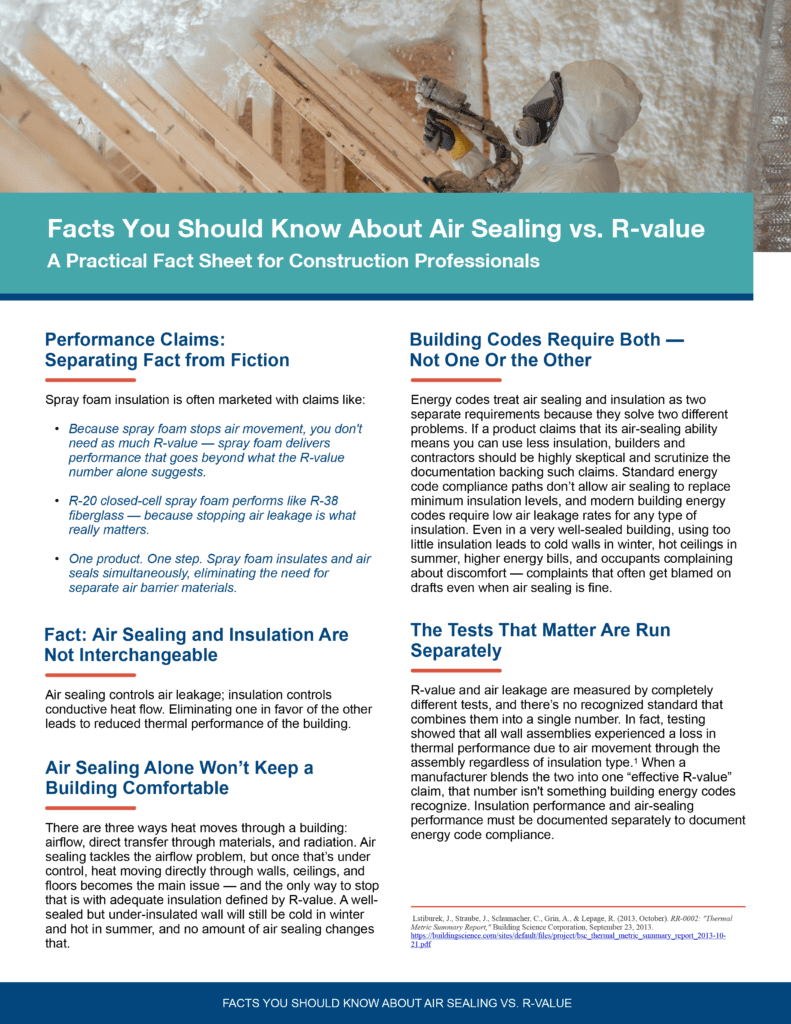
Our newly released fact sheet, Facts You Should Know About Air Sealing vs. R-Value, pushes back on common spray foam marketing claims that suggest air tightness can compensate for lower R-values.
Among the critical points detailed in the fact sheet:
- Air sealing and insulation address two entirely different forms of heat transfer: air leakage and conductive heat flow.
- While eliminating drafts through air sealing is critical, once airflow is controlled, heat still moves through walls, ceilings, and floors — which is where proper insulation matters.
- Building codes treat air sealing and R-value as separate, non-negotiable requirements, and no recognized standard combines the two into a single “effective R-value.”
The fact sheet also includes:
- A jobsite checklist to consult before reducing insulation levels.
- Common “red flag” marketing claims to watch for.
- Guidance on maintaining code compliance without compromising thermal performance.
The bottom line
High-performance buildings require continuous air barriers and code-compliant insulation levels, each of which must be documented, independently tested, and never substituted for the other.