

NAIMA released two publications this week highlighting a significant gap between the labeled R-values and the actual thermal performance of reflective insulation products. These publications can help designers, engineers, and contractors make informed decisions about using these products.
Thermal Resistance Performance Test Results of Reflective Duct Insulation details independent testing conducted by R&D Services in accordance with ASTM C335 and ASTM C518 test protocols. The results showed that several reflective insulation products failed to meet their labeled R-value. The publication recommends that designers, engineers, installers, and end users should ask manufacturers about their product’s performance.
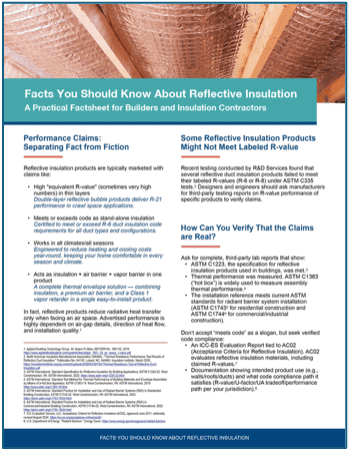
Facts You Should Know About Reflective Insulation highlights claims made by reflective insulation products, including “high equivalent R-value,” that are not supported by ASTM C335 testing. The fact sheet details the risks of buying into overstated performance claims, includes a quick jobsite checklist to request before you buy or install the products, and lists some red flags to watch for in the product’s marketing materials.
While reflective insulation products can reduce radiant heat transfer, their advertised performance depends on air gap details, direction of heat flow, and whether low-emittance surfaces remain clean and unobstructed — conditions that are difficult to guarantee in the field.