

Insulation Institute Blog

EIA: Home Heat Forecast A Mixed Bag

The U.S. Energy Information Administration (EIA) released its Winter Fuels Outlook, and it’s good news for homeowners who heat with natural gas. According to the EIA, those homeowners will see a 9 percent dip in their fuel bills this winter, while homeowners who heat with electricity will see a 4 percent increase in costs, and those who burn oil will see a 21 percent increase.

U.S. homes primarily use natural gas (53 percent), electricity (32 percent), Propane (6 percent), and fuel oil/kerosene (5 percent) for heating. A smaller percentage of homes use wood or have no heating or other heat sources (2 percent and four percent, respectively).

Details »
NREL: Envelope Upgrades Can Save Thousands with Heat Pumps

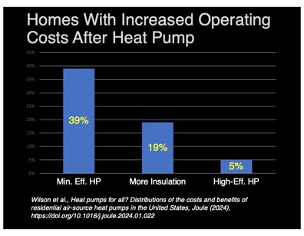
The Inflation Reduction Act provides thousands of dollars in rebates or tax credits for homeowners installing heat pumps. However, even without those rebates, heat pumps would be cost-effective in 65 million U.S. households, according to the National Renewable Energy Laboratory (NREL) research. Further, electrification with heat pumps can reduce greenhouse gas emissions in every U.S. state. However, there is broad variability in the economics of heat pumps after installation, depending on several conditions. Envelope upgrades being one of them.

Details »
NREL: Envelope Upgrades Can Save Thousands with Heat Pumps

Report: Couple Envelope & Electrification Work

A new report just published by the American Council for an Energy Efficient Economy (ACEEE) highlights that pairing residential heat pump heating and cooling systems with air sealing and insulation will reduce likely increases in customer costs and strain on the electric grid. The report’s message is timely as states prepare to implement two key programs of the Inflation Reduction Act and offer more than $9 billion in rebates for residential energy efficiency and electrification improvements.

Details »
Report: Couple Envelope & Electrification Work

Order of Operations Matters with Heat Pumps

Way back in the late 2000s, when I first took my BPI Building Analyst training and got into home performance, one of the first lessons I can remember learning was the importance of working through the proper order of operations. Things like “always seal the high and low bypasses first” and “air seal then insulate because the pressure boundary and thermal boundary must align.”

Details »
Order of Operations Matters with Heat Pumps