
By: Ben Green, Green Leaf Air
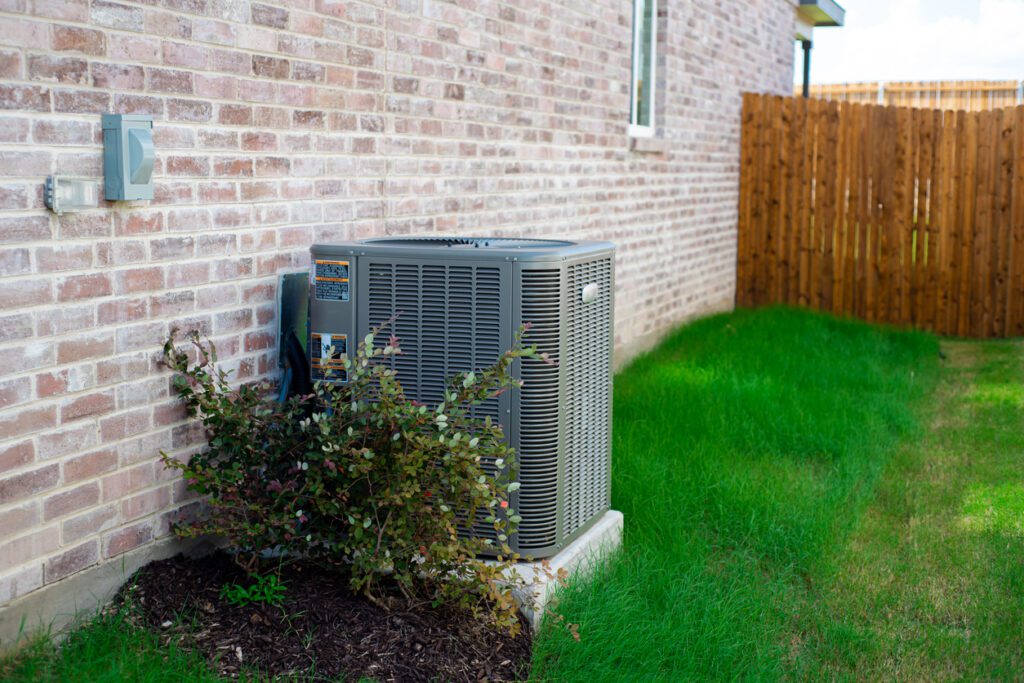
Most homeowners assume that a larger air conditioner will cool their home better, but that’s not necessarily true. On the surface, it sounds logical, but it’s not necessarily accurate. That’s because an oversized unit can make a high-performance home less comfortable, less efficient, and more expensive to operate.
As homes become better insulated and more airtight, their heating and cooling needs change. Yet many HVAC systems are still sized using outdated rules of thumb or by simply matching the old equipment’s size. The result is a system that may cool the home quickly, but struggle to control humidity, maintain consistent temperatures, and operate efficiently.
The “More Tons, More Comfort” Myth
If a larger unit can lower indoor temperatures more quickly, it should perform better, right? That’s not actually the case. Yet, some contractors still rely on outdated sizing practices. Rather than calculating the home’s actual cooling load, they may use rough rules of thumb or simply replace existing equipment with the same tonnage.
This may seem safe, but it ignores how much modern homes have changed.
Basically, large air conditioners are least efficient when they first start up. Their efficiency gradually increases as they continue running. It typically reaches peak performance after 10 minutes of running. (Example illustration below).
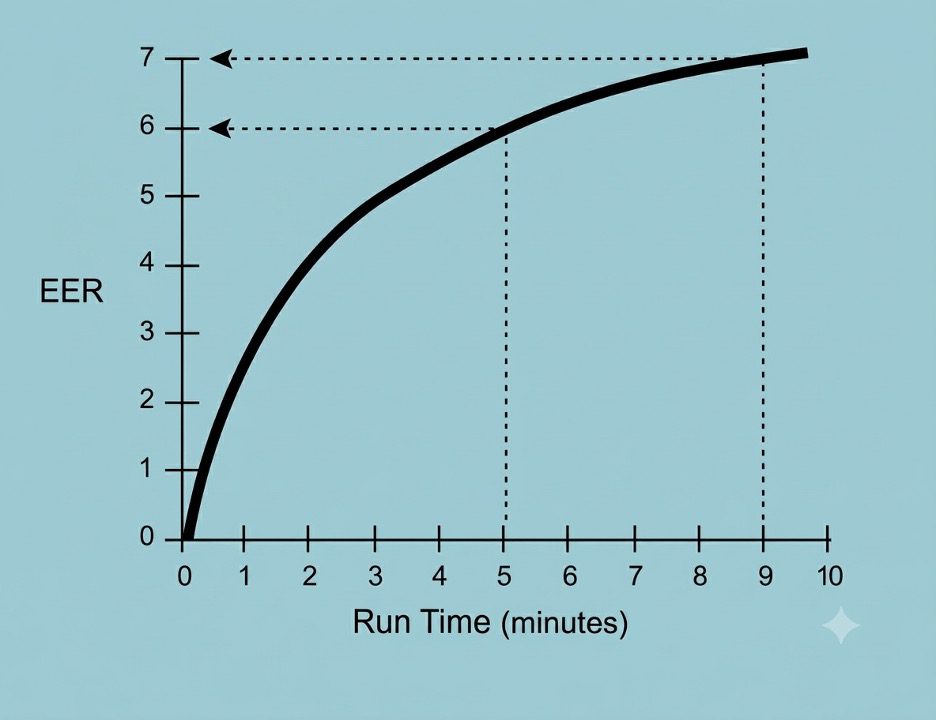
Air conditioners become more efficient the longer they run. Research shows that extending a cooling cycle from about 5 minutes to 9 minutes can improve efficiency by roughly 17 percent.[1]
An oversized system often shuts off too quickly to achieve those efficiency gains.
The Hidden Problems of an Oversized AC System
An oversized air conditioner may cool a home quickly, but that does not mean it performs better. In many cases, an oversized system reduces comfort and creates problems like increased wear and tear. Every cooling cycle begins with a surge of electrical current as the compressor starts. Frequent starts and stops put more stress on the compressor, contactors, capacitors, and other moving parts than longer, steadier cycles.
Over time, this added stress can lead to:
- More frequent service calls
- Premature compressor failure
- Shorter equipment lifespan
- Higher repair and replacement costs
And replacing a failed compressor is often one of the most expensive HVAC repairs. That’s why proper system sizing is an important way to protect your investment.
An oversized system can satisfy the thermostat before conditioned air has circulated throughout the entire home. While the thermostat reaches the desired temperature, rooms farther away may remain warmer.
This often results in:
- Hot and cold spots between rooms
- Temperature differences between floors
- Frequent thermostat adjustments
- Reduced overall comfort
These problems are more noticeable in larger homes and homes with multiple stories.
Reduced Air Filtration and Indoor Air Quality
Every time the air conditioner runs, indoor air passes through the HVAC filter. Longer run times allow the system to circulate and filter more air throughout the home.
An oversized unit runs for shorter periods, which means less air passes through the filter each day. As a result, dust, pollen, and other airborne particles may remain in the living space longer, reducing overall indoor air quality.
For high-performance homes, proper HVAC sizing is about more than cooling capacity. It also supports better comfort, cleaner indoor air, lower maintenance costs, and longer equipment life.
Why Rule-of-Thumb AC Sizing Often Fails
A common shortcut in the HVAC industry is to estimate system size solely based on square footage. While an AC tonnage-by-square-footage breakdown looks reasonable, this shortcut overlooks many factors that directly affect a home’s cooling load.
Different homes have different needs. That’s not just an assumption. In fact, two homes with the same floor area can have cooling requirements that differ by 20 to 40 percent or more. It all depends on how well the home is built and how much heat enters through the envelope.
Here is how two homes with the same square footage can still need very different HVAC systems, depending on:
- Insulation levels in walls and attics
- Window type, size, and efficiency
- Air leakage and envelope tightness
- Home orientation and solar exposure, especially for south- and west-facing walls and windows, which can raise peak cooling loads by 10 to 20 percent
- Local climate conditions, since homes in hot-humid regions often need substantially more dehumidification and longer runtimes
- Duct leakage, which can waste 10 to 30 percent of conditioned air before it ever reaches the living space
- Number of people living, since each person adds both heat and moisture to the home
That’s why you don’t need a bigger unit; you just need one that is the right size for your home.
The Retrofit Trap: When an Existing System Becomes Oversized
The retrofit trap is a hidden enemy of any old HVAC system. Homeowners sometimes improve their homes by adding insulation, sealing air leaks, or installing energy-efficient windows. These upgrades help reduce heat gain in summer and heat loss in winter. This work makes the home more energy-efficient and comfortable.
But the HVAC contractor often overlooks the fact that these improvements also reduce the home’s cooling load.
According to the U.S. Department of Energy, proper insulation and air sealing can reduce heating and cooling costs by up to 15 percent.
In some cases, major envelope improvements can lower cooling demand by 20 to 40 percent or more.[2]
As a result, an air conditioner that was properly sized at installation may become oversized after these upgrades are completed.
The problem becomes a bigger issue when replacement equipment is selected based on the size of the existing system rather than a new load calculation because the original HVAC equipment was sized before insulation, windows, or air-sealing improvements were installed.
That’s why major envelope upgrades should be followed by a new Manual J calculation.
Re-evaluating the home’s heating and cooling loads helps ensure the HVAC system continues to meet the home’s actual performance requirements.
Building Science Works Best When Insulation and HVAC Work Together
Building science is a plan for treating a home as a complete system rather than a collection of separate components. Insulation, air sealing, windows, ventilation, and HVAC equipment should all be in your notes. When a home’s insulation levels improve and air leaks are sealed, the home gains and loses less heat. This reduces the amount of heating and cooling the HVAC system must provide. In many cases, the home may need a smaller system than it did before.
That is why insulation and HVAC design should never be treated as separate projects. Because if you improve one, then it affects the other.
This is the foundation of building science. Every part of the home works together.
Once the contractor calculates the home’s heating and cooling using Manual J, the next step is to select equipment that meets those requirements. ACCA Manual S helps contractors choose the appropriate system based on the calculated load.
That is where modern variable-speed and multi-stage systems make things easy. Both are often a good fit for high-performance homes; they can adjust their output as heating and cooling demands change throughout the day. This helps improve comfort, humidity control, and overall efficiency.
The Bottom Line
The main point is not to install the largest air conditioner possible, but to match the HVAC system to the home’s actual heating and cooling load. Contractors can easily do that by using building science to select the right system for a home.
About the Author: Ben Green is an experienced HVAC technician with over 10 years of expertise in AC repair and installation, HVAC maintenance, air duct cleaning, and insulation services. Known for his technical precision and problem-solving skills, he is passionate about delivering efficient, sustainable climate solutions. Ben stays current with advancements in HVAC technology and enjoys sharing his insights through professional writing, offering practical advice and industry knowledge.
The views, opinions and positions expressed within this video are those of the author alone and do not represent those of the North American Insulation Manufacturers Association (“NAIMA”). The accuracy, completeness and validity of any statements made within this video posts are not guaranteed. NAIMA assumes no liability for any errors, omissions or representations. The copyright of this content belongs to the author and any liability with regards to infringement of intellectual property rights remains with them.
[1] https://jamesriverair.com/beginners-guide-to-why-oversized-hvac-systems-waste-energy/
[2] https://www1.eere.energy.gov/buildings/pdfs/80170.pdf