
Every day, buildings lose energy through uninsulated or under-insulated piping systems. The result? Higher utility bills, greater carbon emissions, and reduced system performance. Fortunately, pipe insulation offers a simple solution with outsized advantages.
Pipe insulation is used in nearly every type of building, but it is most common and most extensively specified in commercial and industrial buildings to improve energy efficiency, safety, and system performance. This week, we look at the benefits of pipe insulation in buildings and detail how NAIMA’s 3E Plus can determine the appropriate insulation thickness for the job. Additionally, we’ll highlight NAIMA’s 3E Estimator tool, which leverages calculations from 3E Plus to provide a simple project-level estimate of the energy costs and emissions savings of pipe insulation for decision makers.
What is Pipe Insulation?
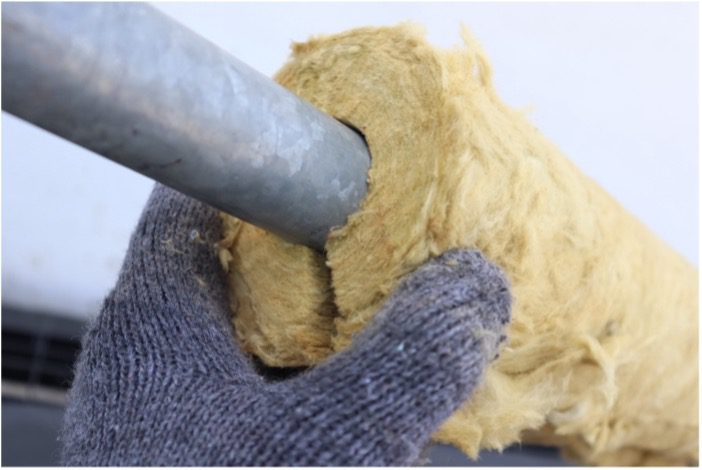
Pipe insulation is exactly what it sounds like – it’s insulation used specifically to provide thermal control for pipes used for mechanical systems. It fits like a jacket around a pipe’s diameter and provides key benefits in buildings.
Benefits of Pipe Insulation
Slows Heat Loss or Gain – Pipe insulation plays a vital role in buildings by slowing heat loss or gain in piping and process control. Because process temperatures can be very high (or low) relative to ambient air, pipe insulation reduces the energy required to deliver proper temperatures.
Reduces Energy Costs – Because pipe insulation slows heat transfer in pipes, it can reduce heat loss from insulated piping systems by as much as 85 to 90 percent [1]compared with bare piping under certain operating conditions.
Condensation Control – Properly insulating pipes and adding a vapor retarder system to chilled water or cryogenic application pipes will keep the surface temperature above the dew point, reducing the potential for condensation and protecting the longevity of the piping system.
Slows Freezing – Insulated pipes help protect the contents of the pipes from freezing during cold snaps, reducing the risk of building damage from a pipe failure.
Employee Safety – Particularly in industrial and commercial buildings, insulated pipes provide personnel protection by bringing the outer surface temperatures down to safe-to-touch levels, as many pipe systems operate at temperatures above 120°F.
Other benefits of pipe insulation include acoustical control (as the insulation product helps reduce sound transmission), fire safety (since many pipe insulation products have very low rates of flame spread and smoke generation in a fire), and carbon emissions reduction (since insulation helps reduce energy use).
Types of Pipe Insulation
There are several different types of pipe insulation materials. The most common materials used to insulate pipes vary depending on the application, temperature range, moisture exposure, and whether the facility is commercial, industrial, or residential; however, the following products dominate the market.
| Material | Common Uses | Temperature Range | Key Benefits |
| Fiberglass | Commercial HVAC, domestic hot water, chilled water | Up to approximately 850°F | Cost-effective, widely available, excellent thermal performance |
| Mineral Wool | Industrial piping, high-temperature systems, commercial buildings | Up to approx. 1,200°F | Fire resistance, sound absorption, water repellency |
| Elastomeric Foam | Chilled water, refrigeration, condensate lines | Up to » -297°F – 220°F | Condensation control, flexible, easy installation |
| Calcium Silicate | Steam systems, refineries, power plants | Up to » 1,200°F | High compressive strength, durability |
| Polyisocyanurate | Chilled water, refrigeration, industrial processes | » -297°F to 300°F | High R-value per inch |
Fiberglass pipe insulation is the most common material in commercial buildings, while mineral wool and calcium silicate dominate many industrial high-temperature applications. Elastomeric foam is a common choice for condensation control on refrigeration piping.
Heavy Use in Certain Sectors
While pipe insulation is used in many types of buildings, some heavy users include hospitals, which rely on it to maintain hot-water temperatures; data centers, which use insulated chilled-water piping to prevent condensation and protect sensitive equipment; and manufacturing facilities with high-temperature processes, which use it to protect workers and improve process efficiency.
If you are considering pipe insulation for a building, NAIMA offers tools to help.
How 3E Plus and 3E Estimator Can Help
NAIMA’s 3E Plus (three E stands for energy, environment, and economics) is a free engineering software tool used to determine the appropriate insulation thickness for mechanical and industrial systems. It is widely regarded as the industry standard for evaluating insulation performance on pipes, ducts, vessels, and equipment.
3E Plus is used by engineers, insulation contractors, facility managers, and designers to calculate:
- Heat loss from hot systems
- Heat gain into cold systems
- Required insulation thickness
- Surface temperatures
- Interface temperatures with insulation systems
- Carbon emission reductions
- Personnel protection; and
- Condensation control
3E Estimator Calculates Estimated Savings
The companion tool, 3E Estimator, is a simplified tool that estimates energy, costs, payback, and emissions benefits from insulating pipes in commercial and industrial buildings.
While 3E Plus is designed for engineers to perform detailed insulation calculations, 3E Estimator is intended for building owners, facility managers, sustainability professionals, and other non-technical decision-makers who want a quick assessment of whether a pipe insulation project is worth pursuing.
In addition to energy savings calculations, 3E Estimator calculates
- Annual energy cost savings
- Simple payback period
- Carbon dioxide emissions reductions;
Why It Matters
Pipe Insulation is a behind-the-scenes superstar in buildings, providing key controls and benefits for mechanical operations. It serves many key functions within commercial, industrial, and residential buildings, and its use will only expand as the U.S. building sector seeks options to limit carbon emissions, control energy costs, and improve system operations. There is an enormous opportunity to expand the use of all insulation products to realize significant economic benefit, and pipe insulation is no exception.
In a 2024 study, ICF estimated that improvements to piping and mechanical insulation in industrial facilities across eight major industrial sectors would save more than $126 billion in energy costs, with an average capital cost of $3.77 billion. The average payback period on this investment is one year, with some being as little as six months.
NAIMA’s 3E Plus and 3E Estimator tools simplify the work of determining how much pipe insulation a building needs and what the potential economic, carbon emissions, and energy savings could be. These are free, but invaluable tools to users.
Whether you’re designing a new facility, evaluating retrofit opportunities, or simply trying to reduce operating costs, NAIMA’s free 3E Plus and 3E Estimator tools can help identify the right insulation strategy for your building.
[1] Estimate derived using NAIMA’s 3E Plus pipe insulation thickness tool.